
 1 January 2026
 0 Comments
 Case Study: Personal Due Diligence, Digital Exposure & Integrity Indicators in a Relationship Background Investigation
Executive Summary
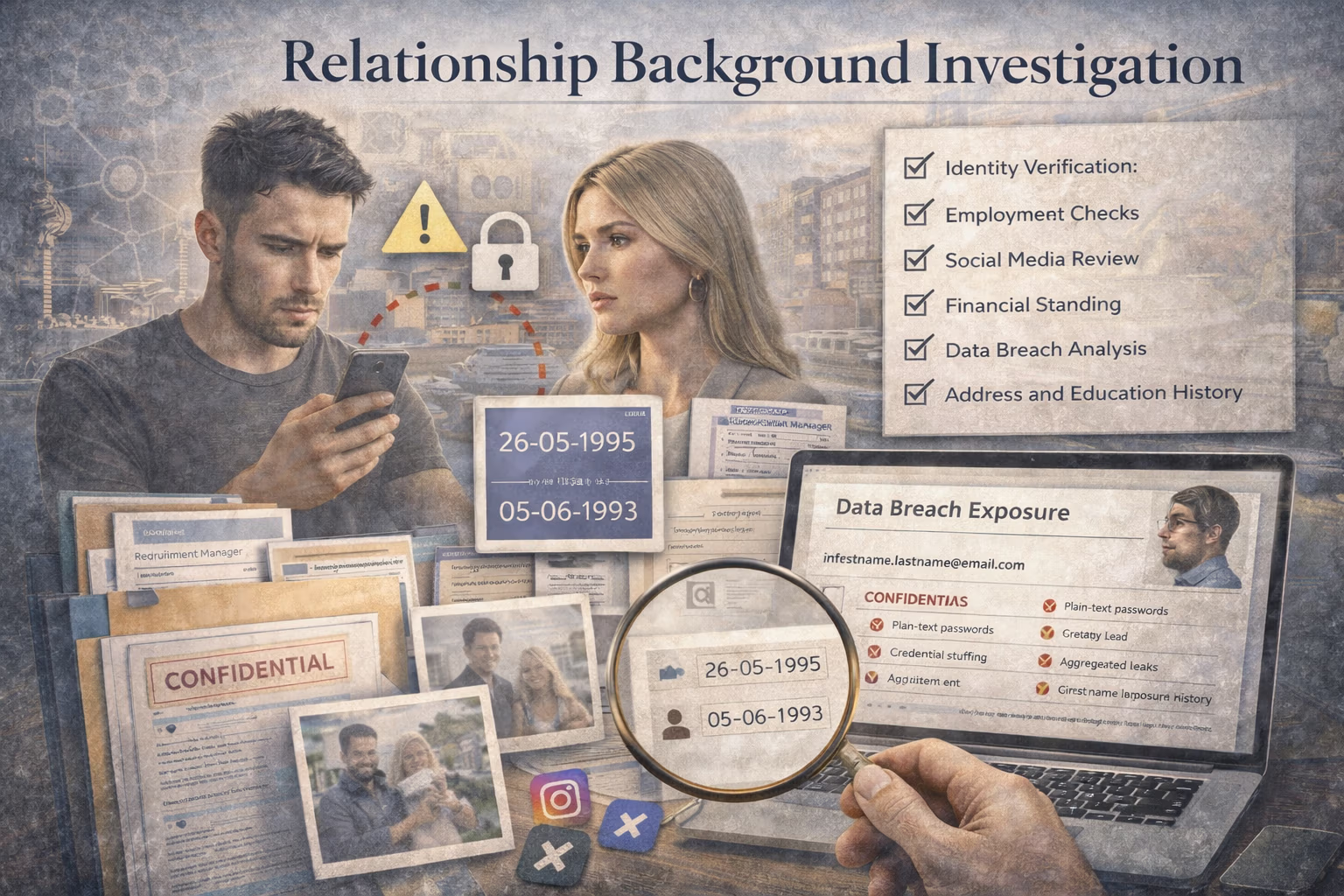
FFIATS was instructed to carry out a discreet relationship background check into an individual following concerns raised by a parent about their daughter’s boyfriend. The purpose of the relationship background investigation was not to identify criminal activity, but to assess the integrity, consistency of personal information, and overall risk profile relating to the boyfriend’s character and suitability within the relationship.
While the investigation found no evidence of criminal, financial, or reputational misconduct, it revealed several non-obvious risk indicators which are frequently overlooked in personal and corporate due diligence, particularly identity inconsistencies (the boyfriend had lied about his age).
This case demonstrates why modern Relationship Background Investigations must extend beyond credit checks and criminal records to include data integrity, and behavioural consistency.
Background & Scope of Investigation
The investigation was commissioned to assess whether reliance could reasonably be placed on an individual in a trusted personal context, with potential future financial or reputational implications.
The scope included:
Key Findings
During the investigation, conflicting personal data was identified across official and semi-official records, including:
While such discrepancies can occasionally arise from administrative error, the persistence and pattern of inconsistency raised legitimate integrity questions.
Risk insight:
In regulated, financial, or trust-based environments, inconsistent identity data is a recognised red flag, as it can indicate attempts to manage age, credit history, or prior records.
The subject demonstrated:
No evidence of misrepresentation or professional misconduct was identified.
Risk insight:
Strong professional credentials can coexist with other risk indicators; competence alone does not eliminate the need for holistic due diligence.
Comprehensive checks identified:
This reinforced the conclusion that financial misconduct was not present.
A significant finding related to digital risk, rather than personal conduct.
The investigation identified that a primary email account associated with the subject had appeared in numerous global data breaches spanning more than a decade. These breaches included:
There was no evidence that the subject caused these breaches. However, the scale and duration of exposure created elevated risks relating to:
Risk insight:
Data breach exposure is increasingly relevant in both personal and professional risk assessments, particularly where individuals hold trusted roles or access sensitive information.
The subject maintained:
No adverse media coverage or reputational concerns were identified.
Why This Matters
This case highlights a key reality in modern investigations:
Absence of wrongdoing does not equate to absence of risk.
For families, employers, investors, and professional advisers:
Outcome
The findings were presented to the client in a balanced, evidence-based format, enabling:
No adverse action was recommended, but heightened awareness and practical digital-security measures were advised.
Lessons Learned
Across jurisdictions, FFIATS consistently observes that:
How FFIATS Helps
FFIATS provides discreet background investigations, digital footprint analysis, and integrity assessments for:
Our approach is factual, proportionate, and designed to support sound judgment, not speculation.
Compliance Notice
This case study is anonymised and prepared for illustrative purposes only. It does not refer to any identifiable individual and does not allege wrongdoing. Findings reflect risk indicators observed during a confidential investigation.



CASE STUDY Investment Trader Fraud & Churning – £100,000 Trading Account Investigation Overview FFIATS was instructed to investigate a suspected…

Case Study Enforcement Support Following False Statements on a Record of Examination Case Overview A commercial landlord (“the Client”) obtained…
Relationship Investigations When the Person You Trust Is Not Who They Claim to Be When a relationship is built on…