
Counter Surveillance Prevent or Detect prying eyes and cyber attacks
Technical Surveillance Counter Measures (TSCM) also referred to as Counter Surveillance, involves detecting, mitigating, and preventing surveillance activities aimed at an individual, group, or organisation. It is often employed to protect privacy, ensure security, and safeguard sensitive information. A great knowledge of surveillance is required in order to implement effective counter surveillance measures. Often counter surveillance will work hand in hand with a Close Protection Team.
FFIATS is your trusted partner for Technical Counter Surveillance Measures, we only use MoD and home office approved equipment for our listening device sweeps and ongoing monitoring services.
Physical Counter-Surveillance
Fraud investigations encompass a wide range of activities, requiring a multidisciplinary approach. Complex commercial and investment fraud cases often involve:
SURVEILLANCE DETECTION ROUTES (SDR)
Employing planned movements to identify if someone is following you and mitigate against leapfrogging surveillance tactics or use of GPS vehicle trackers. This involves taking unusual routes, sudden stops, or changes in direction to counter foot surveillance and / or vehicular surveillance.
OBSERVATION SKILLS
Training individuals to notice suspicious behaviour or repeated encounters with the same people or vehicles.
SPOT CHECKS
Periodic inspections of personal or corporate spaces for unauthorised devices or intrusions. For example, whether vehicle tracking devices, listening devices and or covert cameras have been placed around your home, place of work or objects placed in close proximity to you.
TSCM EMPLOYEE TRAINING & AWARENESS CAMPAIGNS
FFIATS offers comprehensive counter-surveillance services, including hands-on Technical Surveillance & Counter Measures training, tailored to client’s needs.
Our programs enhance your understanding of surveillance methods, increase awareness of surveillance techniques, surveillance equipment and equip you with the skills and Technical Surveillance Counter Measures equipment to independently manage and strengthen your personal security or workplace security. Alternatively, FFIATS offer a remote monitoring service to ensure you are consistently protected.
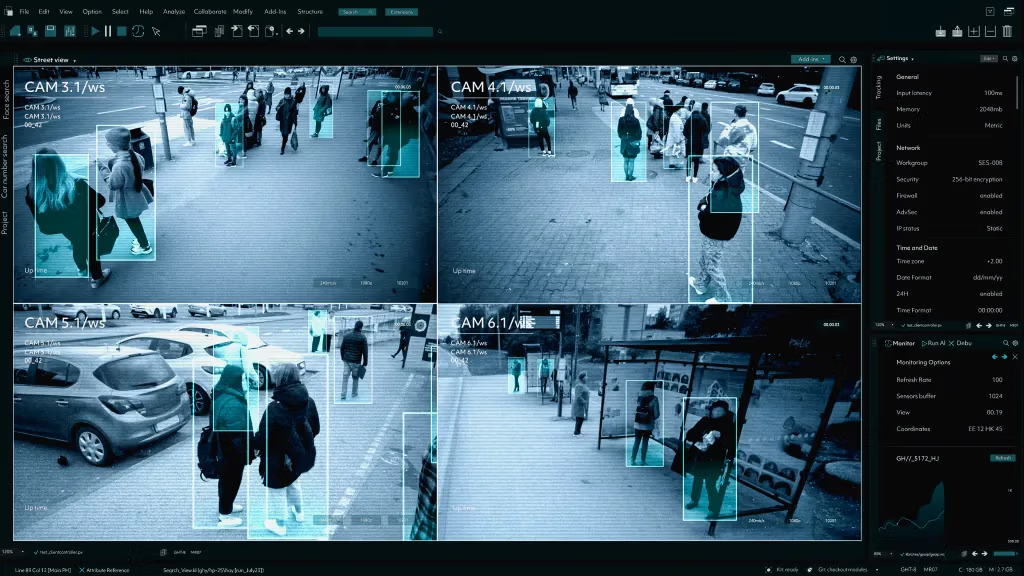

Technical Counter-Surveillance
Fraud in the workplace can be committed by managers, employees, suppliers, clients, or external scammers and there many forms of fraud. Common categories include:
BUG SWEEPING
Using specialised equipment to detect and locate hidden microphones, other listening devices, cameras, or GPS trackers.
SIGNAL DETECTION DEVICES:
Identifying and analysing unusual radio frequencies which may indicate transmitting devices and counter such technologies using electromagnetic field detector and / or signal jamming counter surveillance technology.
THERMAL IMAGING
Detecting heat signatures from concealed electronic devices.
GPS TRACKER DETECTION:
Kickbacks, use of shell companies, and product substitution affecting quality or compliance.
FFIATS can provide a comprehensive counter surveillance service to ensure your home, your workplace, your phone and computers are safe from technical surveillance equipment, hackers and other unwanted prying eyes.
Digital Counter Surveillance & Cybersecurity
FInvestment fraud is increasingly difficult to spot, with scamm
NETWORK MONITORING TOOLS
WiFi and Network security is of paramount importance to identify and prevent unauthorised access or unusual data traffic on networks.
ENCRYPTION
Encrypting communications and data to prevent unauthorized interception.
SECURE CONNECTIONS
Using VPNs and secure networks to mask online activity.
ANTI-MALWARE SOFTWARE
Protecting against spyware and keyloggers that monitor online and offline activity.


Drone Counter Surveillance
How do you stop someone from using a drone over your property or business?
Aerial Counter-Surveillance
- Drone Detection System
- Jamming Equipment (not a legal option in the UK)
- Physical Barriers
Behavioural Counter-Surveillance
- Pattern Breaking: Avoiding predictable routines to make tracking more difficult.
- Disinformation: Spreading false information to mislead potential surveillance efforts.
- Minimizing Exposure: Reducing visibility in public settings and on social media to limit surveillance opportunities.
Open-Source Counter-Surveillance
- Monitoring Public Information: Regularly reviewing publicly available information to ensure sensitive data isn’t exposed.
- Social Media Awareness: Controlling personal or organizational presence on social platforms to avoid being targeted.
Human Counter-Surveillance
- Counter-Surveillance Teams: Employing trained professionals to observe and identify surveillance threats.
- Decoys: Using individuals or objects to misdirect and expose surveillance activities.
- Undercover Operatives: Deploying personnel to infiltrate and disrupt surveillance operations.